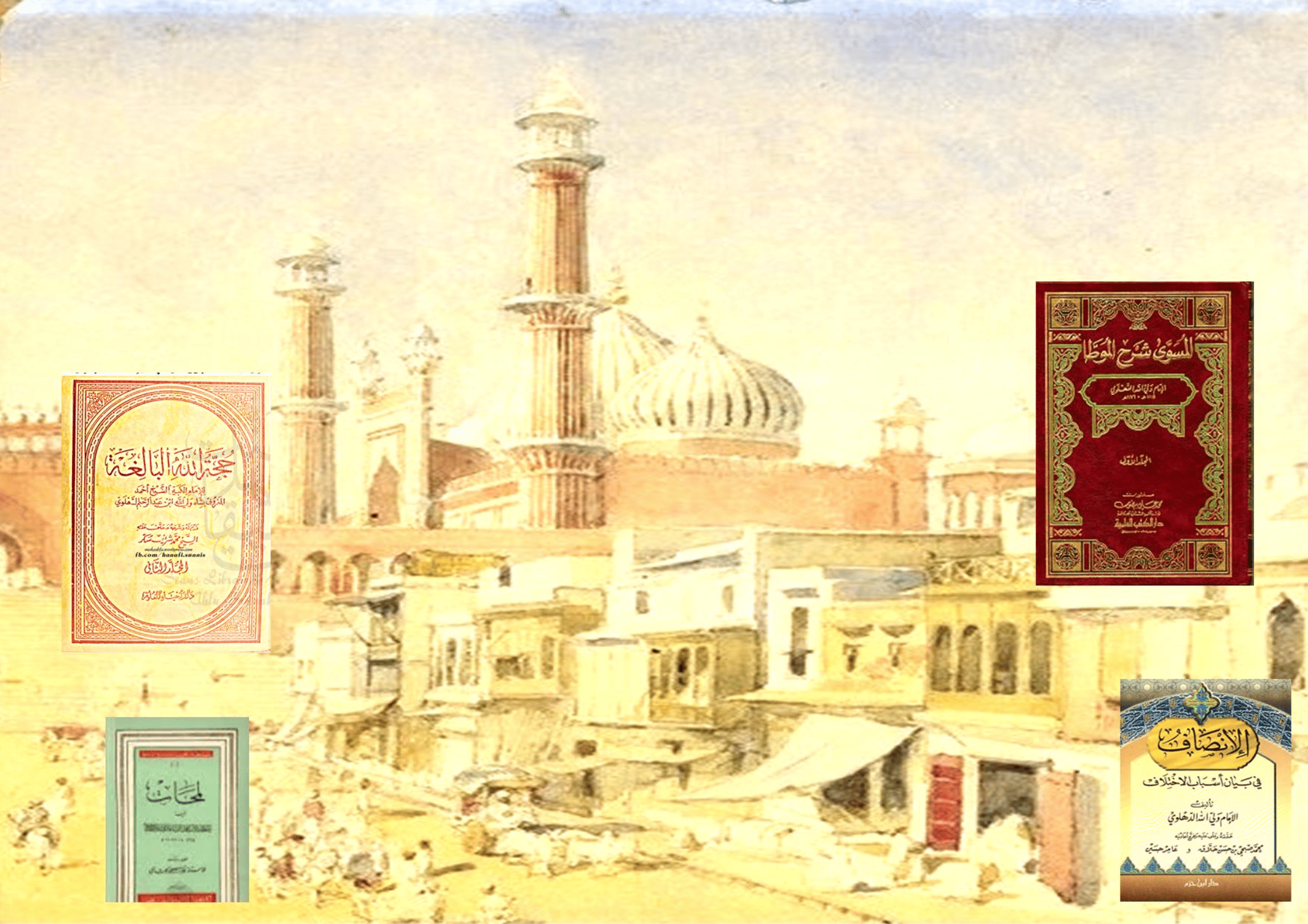
The following is a translation of an edited article penned by the esteemed Shaykh ʿAbd al-Raḥmān Nadwī Nagrāmī. It is estimated that it was written somewhere between 1922 to 1926. The Shaykh graduated from Dār al-ʿUlūm Nadwat al-ʿUlamāʾ in Lucknow and studied under the likes of ʿAllāmah Sayyid Sulaymān Nadwī. After completing his education, Shaykh ʿAbd al-Raḥmān Nagrāmī served for four years at Madrasat al-Iṣlāḥ as a teacher. Among his most prominent students of that period was Shaykh Amīn Aḥsan Iṣlāḥī, whose celebrated tafsīr Tadabbur-i Qurʾān later received wide appreciation from scholars. The Shaykh's primary inclination was toward reform and writing, and for this reason he was deeply fond of the works of Shaykh al-Islām Ibn Taymiyyah. This inclination led him to become the president of Anjuman Tablīgh al-Islām, Nagrām, where he participated in its activities with great dedication. The Shaykh produced several important scholarly works.
Shaykh ʿAbd al-Raḥmān Nagrāmī passed away in 1926, having lived only twenty-six years. News of his death spread rapidly, and the entire country mourned the loss of this brilliant young scholar. Regarding his religious zeal and wisdom, ʿAllāmah Sayyid Sulaymān Nadwī writes, "With the passing of the late Mawlānā, the younger generation of scholars has lost an important pillar, and the religious and reformist movement in India has suffered a great loss. How can we convince those who were not acquainted with him of this reality? He was not among those who, when reconciling religious principles with the needs of the age, lighten the weight of religion itself. He was always a quiet and deeply religious man. Piety and devotion adorned his learning and excellence. Many who claim reformist ideas are weak in religious practice, but his personality combined both firmness and reform. He was extremely religious and at the same time deeply reformist. Every word of his speech and writing constituted a chapter of moral and religious reform.”
Mawlāna Abū al-Kalām Āzād wrote an extremely moving letter of condolence in which he spoke of his deep attachment and affection for the late Shaykh.
The Naming of the Prophet ﷺ by ʿAbd al-Muṭṭalib
The blessed name of the Prophet ﷺ was given by his grandfather ʿAbd al-Muṭṭalib. It is commonly stated regarding this that it was given,“In the hope that he would be praised.”
It is said that ʿAbd al-Muṭṭalib, having perceived auspicious signs, named the child Muḥammad (ﷺ) so that in the future this blessed newborn would become the master of all praises and the one to whom creation would turn in admiration. Some among the people of Ṣūfism carry their subtle analysis to great lengths and explain that the word “Muḥammad ﷺ” is derived from the Divine Name “Aḥad.”
Ordinarily, a name is regarded merely as a means of distinguishing one thing from another. Yet this is not the true and complete purpose of a name. A name ought to serve as a mirror reflecting the qualities, characteristics, and circumstances of the one it denotes. In the naming of individuals this principle is seldom observed; however, in the naming of categories and classes it is generally fulfilled—for example, words such as insān, Muslim, or nation. Occasionally, though rarely, this principle is observed in personal names as well, such as “Masīḥ” and “Buddha.” Both of these names reflect certain attributes and characteristics of the persons to whom they refer.
It is worth remembering that historically, so far as records indicate, this name had not been used among the Arabs before the birth of the Prophet ﷺ. Historians often write, “This name was not common among the Arabs.” If this fact is acknowledged, then the occurrence of this blessed name in the mind of ʿAbd al-Muṭṭalib appears to be a manifestation of Divine Will. When the perfect recipient of that name had already appeared in the world, ennobling it with his presence, the name itself naturally occurred to the mind of the one who bestowed it.
The Meaning of the Name Muḥammad ﷺ
The simple and commonly accepted translation of the blessed name is “the one who is praised.” There is no doubt about the correctness of this translation. Yet when compared with the virtues and excellences of that supreme comprehensive reality, the complete intermediary and ultimate purpose of creation, the translation seems insufficient. All the prophets of Allah are worthy of praise in His sight, and many sages and conquerors of the world are considered praiseworthy in the eyes of people. Therefore, while accepting the correctness of this translation, we should extend our inquiry further.
The author of Mufradāt explains the meaning of Muḥammad as:
الذي اجتمعت فيه الخصال المحمودة
“The one in whom all praiseworthy qualities are gathered.”
In brief, it may be said that the word Muḥammad ﷺ signifies the embodiment of all excellence.
اے کہ تو مجموعہ خوبی بچہ نامت خوانم
“O you who are the collection of all virtues—how shall I call you merely a child by name?”
The Concept of the “Point of Creation” and the Perfection of Species
The creative power of the Divine is limitless; His wonders are beyond enumeration, and the gate of creation remains forever open. Reflection leads us to conclude that Divine power has established a certain measure of perfection for each species of creation. Every species has a degree of completion beyond which it does not advance. Evidence of this may be found even among animals, plants, and inanimate objects. Forms may be similar and structures alike, yet their attributes differ. Among these differing attributes there exists an ultimate level that may be described as the highest genus, beyond which there is no further degree. In every species, the point at which all attributes converge in their completeness may be described as the objective of nature and the point of creation.
This concept of the “point of creation” must be clearly understood. With even modest reflection it becomes evident that after investigation we discover among all species a highest degree of attributes beyond which human knowledge cannot perceive any further level. If such an ultimate objective exists for all species, it must also exist within the community of humankind. Yet there is a fundamental difference between humans and other creatures: whereas among other species hundreds of individuals belong to the same type, in humanity every individual, because of unique attributes and characteristics, may almost be considered a distinct type.
A brief survey of human history shows that the outward form of humanity, its physical structure and bodily composition, remains essentially the same today as it was for the first human being. Yet the intellectual and mental qualities of humanity differ greatly and continue to evolve. If we examine this intellectual evolution carefully, it becomes clear that the ultimate frontier of mental development in the history of languages, literature, and civilization appears in the sacred personality of the Messenger of Allah ﷺ.
Muḥammad ﷺ as the Fulfillment of Humanity’s Purpose
Lexicographers also mention among the meanings of the word ḥamd the phrase “fulfilling a right.” In this sense, the name Muḥammad ﷺ may also mean “the one whose due has been fully given.” In other words, the perfection that Divine power intended for the human species, and the right that humanity owed its Creator in the act of creation, was fulfilled in Muḥammad ﷺ.
Knowledge and action, character and disposition, intellect and moral strength, these constitute the essence of humanity and the summary of creation. Knowledge forms the foundation of action; character is built upon intellect; outward conduct rests upon inner disposition. History bears witness that the degree of moral perfection and strength of character manifested in the blessed person of the Prophet ﷺ has no parallel in human history, and even his enemies acknowledged it.
إِنَّكَ لَعَلَىٰ خُلُقٍ عَظِيمٍ
Indeed, you are upon an عظیم character. [Surah al-Qalam, 4]
In Arabic usage, the word ḥamd can also signify performing an action with full capability. In heroic poetry, when a spear strikes with full force, the expression is used:
حمدت بلاءه - I delivered the blow completely.
In light of this meaning, the word Muḥammad ﷺ may also signify “the perfect creation.”
Among the many miracles of prophethood and signs of the Messenger’s mission, even the blessed name of the Prophet ﷺ itself may be counted as a miracle. This living and enduring miracle has borne witness to its truth from the moment of his mission until today. The lexicographer al-Qāmūs writes that Muḥammad means:
محمد الذي يُحمد مرة بعد مرة
“The one who is praised again and again.”
As time advances and humanity progresses in knowledge and reflection, the excellence of the Messenger of Allah ﷺ becomes increasingly manifest, not merely as a matter of belief, but as historical reality. Many European scholars, as they deepen their study of Islamic history, are compelled to acknowledge that the law brought by the Prophet of Arabia adequately addresses the needs of humanity and that his life provides the finest model for human society. Similarly, as the temperament of Asian peoples increasingly inclines toward spirituality and simplicity, they find themselves drawing closer to Muḥammad ﷺ.
Thus the blessed name itself, given more than thirteen centuries ago, continues to testify to a reality that unfolds across time. Whether humanity advances in its present direction or returns to the lessons of its past, it will ultimately be compelled to acknowledge the perfection of the Prophet ﷺ. In this sense, the translation of the name Muḥammad ﷺ may be understood as “the continuous chain of praises and excellences.”
As mentioned earlier, names and attributes seldom correspond perfectly in the case of individuals. Occasionally coincidence may produce some correspondence, but it has almost never occurred that a name fully reflects the entire life and character of the one who bears it. Yet the blessed name of the Messenger of Allah ﷺ is an exception. The perfect harmony between the name and the life suggests that ʿAbd al-Muṭṭalib must have received some form of divine inspiration when choosing it.
Indeed, when the life of the Prophet ﷺ is examined, by both friends and foes, the conclusion is unanimous: in knowledge and action, outward conduct and inner character, the life of the Prophet ﷺ was worthy of praise in every respect. The word Muḥammad ﷺ is therefore nothing less than the translation of his entire life. Even more remarkable is that the blessed name itself indicates that he is not only a prophet but the Seal of the Prophets. Perfect knowledge and perfect character are distinctive attributes of the prophets. In earlier prophets, excellence often appeared prominently in a particular aspect; yet the life and teachings of the Prophet Muḥammad ﷺ demonstrate a unique comprehensiveness.
Recognition of the Prophet’s Excellence Across Civilizations
The meanings of Muḥammad that we have mentioned—“the embodiment of excellence” and “the perfect creation”—represent the ultimate point beyond which there is no further stage. At this point perfection reaches its culmination and the chain of prophetic knowledge finds its completion. Beyond this point there remains neither the need nor the possibility for another prophet. Even among European orientalists, those who studied the life of the Prophet ﷺ carefully were compelled, despite their efforts to criticize, to acknowledge his greatness. Writers such as Sir William Muir and Margoliouth were forced, openly or implicitly, to admit that the teachings of the Prophet of Islam rest upon profound truth and sincerity.
During the time of the Prophet ﷺ himself, similar incidents occurred when some of the fiercest opponents were unable to resist the power of a single glance from his noble face. It is well known how ʿAbdullāh ibn Salām (رضي الله عنه), one of the leading Jewish scholars, accepted Islam. The events of the Prophet’s mission, his character, and his teachings contain such a compelling attraction that even the strongest opponents are compelled to acknowledge the truth.
The Linguistic Depth of the Word Muḥammad
The word Muḥammad is derived from the Arabic root taḥmīd, a verbal noun of the form tafʿīl, which often implies that an action occurs under the influence of a compelling force. Thus the meaning of Muḥammad may also be understood as “the one whose praise is drawn forth irresistibly.” It is narrated regarding ʿAbdullāh ibn Salām that upon seeing the blessed face of the Prophet ﷺ he immediately declared, "This is not the face of a liar.”
Although in Europe attempts were made to portray the Prophet ﷺ in the worst possible ways, the sincere efforts of certain groups and God-fearing individuals have demonstrated that whenever the true image of the Prophet ﷺ is presented, people recognize it as the object of their deepest aspirations. Another characteristic of this verbal form indicates the performance of an action in its fullest sense, leaving no aspect incomplete. Thus the meaning of Muḥammad may also be understood as “the one whose every aspect is worthy of praise.” In the fields of self-reform, family governance, and social administration, there is hardly a branch in which the Prophet ﷺ did not present a perfect practical example.
The Perfect Model for Humanity
The entire chain of prophets appeared in the world according to a divine order, each bringing with him a particular moral, spiritual, or administrative excellence. When this blessed chain reached its final stage, it became necessary that humanity be presented with a perfect model embodying all those virtues—a life in which the zeal of Mūsá عليه السلام, the compassion of ʿĪsā عليه السلام, and the devotion of Ibrāhīm عليه السلام would appear together, yet surpass them all in completeness. That comprehensive and perfect reality is the blessed person of Muḥammad, the Messenger of Allah ﷺ. For this reason ʿĪsā عليه السلام foretold his coming using the word Aḥmad, meaning the one who would be the most praised and would surpass all who came before him.
Throughout history many religions achieved full development only when they passed from spiritual beginnings into the patronage of political power. Christianity spread widely through the support of Roman emperors. Buddhism achieved its universal reach only after gaining the patronage of the Aśokan dynasty. Islam, however, followed a different path. Wherever it spread, it spread first through spirituality and moral influence. The sword entered only after the influence of faith had already taken root. The histories of Africa and India provide clear examples of this.
This distinctive characteristic of Islamic propagation is also reflected in the blessed name itself.
فَقُطِعَ دَابِرُ الْقَوْمِ الَّذِينَ ظَلَمُوا وَالْحَمْدُ لِلَّهِ رَبِّ الْعَالَمِينَ
So the wrongdoers were utterly uprooted. And all praise is for Allah—Lord of all worlds. [Surah al-An'am, 45]
At times the removal of corruption appears impossible through outward means, yet the workings of nature continue silently until they appear at their appointed time. Nature’s movement is swift like the wind and gentle like a flowing flood.
In Arabic usage the word ḥamd is also employed to describe wise strategy and excellent method. Thus the name Muḥammad may also signify “the one whose success and progress were accompanied by perfect divine wisdom.”
The spread of his teachings and the expansion of the religion he brought occurred through the special will and divine plan of Allah, so rapidly and without worldly means that the world continues to marvel at it.
In summary, along with all the spiritual excellences of Islam, the blessed name of the Prophet ﷺ itself is a portrait of many virtues and a summary of numerous excellences. On one hand it foretells the mission and the final outcome of his work; on the other it represents the history of his achievements and the essence of his teachings.
Pure and exalted is Allāh, who bestowed such a blessed name upon His Prophet; and blessed is that Prophet whom his Lord adorned with such magnificent virtues.
And all praise belongs to Allah, Lord of all the worlds.