The following is a translation of a series of articles penned by my great grandfather Shaykh al-Tafsir Muḥammad Owais Nadwī Nagrāmī رحمه الله titled 'Some Scenes and Impressions from the Journey to Ḥijāz'. It was published in the esteemed al-Furqan magazine in India in July, 1950. It reads like a travelogue of his journey by sea to Hajj, what he experienced and witnessed there, and back to India in 1948.
In the Name of Allah, the Most Merciful, the Especially Merciful.
All praise belongs to Allah, and He is sufficient; and peace be upon His servants whom He has chosen.
It was the 5th of September 1948, corresponding in the Arabic calendar to 20 Shawwāl 1367 AH, when at 5:20 in the evening the Islamic ship of the Mogul Line, carrying eighteen hundred passengers, departed from the shores of Bombay, bound for Jeddah.
دریں دریائے بے پایاں دریں طوفانِ موج افزا
سر افگندیم بسم اللہ مجریہا ومرسٰہا
In this boundless ocean, amidst these storm-swelling waves,
We cast ourselves forth, saying: “Bismillāhi majrāhā wa mursāhā.”
I had left my hometown Nagrām on the morning of 21 August 1948 for Lucknow, and from Lucknow departed for Bombay on the afternoon of 22 August. By the grace of Allāh, there now appeared to be no outward obstacle remaining in the path of this blessed journey. Yet:
عشق است و ہزار بدگمانی
It is love that breeds a thousand apprehensions.
Deep within, the heart trembled lest some obstacle might still arise! After twelve days of waiting, the ship finally set sail. I had thought that this suspicious heart would now find peace, but how could tranquility be written in the destiny of such a restless soul?
Now the concern was this: the ship would reach Jeddah after twelve days. Yet for destiny to reveal its design, even twelve hours, or twelve minutes, are sufficient. Thus, the body was being carried toward Jeddah, while the heart remained suspended between hope and fear, sometimes joyful and elated, sometimes trembling and anxious, standing before a Majestic Court utterly free of need, and constantly turning toward Him alone.
فالحمد لله على ذلك
The Early Days at Sea
The first eight days of the sea voyage passed in such a manner that above us stretched the blue sky, and below us the deep blue sea. Upon the surface of that vast water floated this enormous ship weighing thousands of tons, yet in reality more insignificant than a speck of straw, tossed about by the mountain-like waves of the ocean.
But Subḥān Allāh! What an extraordinary gift the human intellect is! Within this immense ocean, this seemingly insignificant vessel pressed forward, striking against the waves and cutting through the water as it advanced.
سُبْحَانَ الَّذِي سَخَّرَ لَنَا هَذَا وَمَا كُنَّا لَهُ مُقْرِنِينَ
Glory be to Him Who has subjected these for us, for we could never have subdued it ourselves.[Surah Ibrahim, 13]
The First Signs of Land
It was probably the seventh day when a few birds appeared near the ship. Hundreds of passengers abandoned their places and hurried to the upper deck simply to catch sight of these birds. Those experienced in sea travel explained that the appearance of birds is a sign that land is near.
Until now, we had been sailing in the Indian Ocean. Now, suddenly, the Red Sea had arrived. Before us, on the right, lay the Arabian Peninsula, and on the left, the deserts of Africa. Subḥān Allāh! What were these eyes now witnessing? Those were the mountains of Aden, and the ranges of Mukallā and Bushahr.
دیکھنا قسمت کہ آپ اپنے پہ رشک آجائے ہے
میں اسے دیکھا کروں کب مجھ سے دیکھا جائے ہے
Fortunate indeed is the one who envies himself,
For how can I bear to behold that which I now behold?
I cannot say what it was, but the eyes never grew weary of gazing upon those mountains. Indeed, the condition was like the Persian expression:
نظارہ زجنبیدنِ مژگاں گلہ دارد
Even the movement of the eyelids seemed a complaint against the interruption of this vision.
The heart desired to cling to those mountains and weep, recounting the sorrows of separation with such intensity that even the mountains would tremble and stones themselves would shudder. People say these mountains are barren, dry, and scorched. Yet the sense and perception within me discovered in them a beauty, intimacy, and captivating charm whose memory remains vivid even today.
Discussion about Yalamlam
There was no halt at Kamrān, and now we awaited Yalamlam. During these days, an interesting scholarly discussion arose aboard the ship among learned passengers regarding Yalamlam, the mīqāt. The question discussed was:
How is Yalamlam considered the Mīqāt for the people of India? Yalamlam is one of the mountains near Saʿdiyyah and is actually the mīqāt for the people of Yemen. Pilgrims from India assume iḥrām there merely because their ship passes in front of that mīqāt.
But the reality of “passing in front” is that, according to the captain, the mountain lies seventy to seventy-five miles away from the ship, not even visible through binoculars. When the captain was asked how he determines the moment for iḥrām, he replied, “We estimate according to the ship’s speed that we are now passing opposite Yalamlam, and based on that estimate we sound the whistle.”
The matter requiring investigation is whether such distant alignment (muḥādhāt) is legally valid or not. Until this issue is conclusively resolved, the existing practice of entering iḥrām at that point will continue. Yet it remains a subject worthy of scholarly investigation by the ʿulamāʾ al-muḥaqqiqīn.
Intention to Visit Madinah First
As Yalamlam approached, pilgrims began preparing to enter iḥrām. Among the eighteen hundred passengers, our small group of three individuals had already resolved to first present ourselves at al-Madīnah al-Ṭayyibah before proceeding for Ḥajj.
Out of consideration for our companionship, several noble and kind-hearted friends from Azamgarh, along with ten companions from Muradabad, also decided to travel to Madinah first. Thus, for us, the question of entering iḥrām at Yalamlam did not arise.
However, among some nearby fellow travelers, this became a topic of debate. Eventually, the discussion turned into the question: Is it even permissible to go to Madinah before performing Ḥajj?
I had absolutely no inclination for debate. With utmost humility, I submitted, “We are not forcing anyone; indeed, we are not even advising anyone to go to Madinah first. Therefore, your objection is quite unnecessary. As for the right of sincere advice based on brotherhood in faith, we appreciate it. However, we have already satisfied ourselves with reliable books on this matter.”
In the books dealing with Ḥajj and Ziyārah, it is clearly stated: If a pilgrim approaches through the route of Madinah, it is preferable that he first attain the blessing of visiting the Prophet ﷺ and then proceed for Ḥajj.
If Madinah does not lie on the route and the Ḥajj is voluntary (nafl), one has the choice either to perform Ḥajj first or visit Madinah first. However, if the Ḥajj is obligatory (farḍ), jurists state that it is preferable to perform Ḥajj first and then visit al-Madīnah al-Ṭayyibah.
It should be clearly understood that this is not a matter of permissibility or prohibition, but rather of what is preferable and less preferable. Moreover, if time allows one to travel to Madinah and return easily before the days of Ḥajj, even this distinction disappears. For further details, see Imam Ibn Ḥajar al-Haytamī’s work: al-Jawhar al-Munaẓẓam
Arrival at Jeddah
On Thursday, 16 September 1948, corresponding to 12 Dhū al-Qaʿdah 1367 AH, excitement spread across the ship from early morning. According to Indian time, it was expected that the ship would reach Jeddah by 2:00 PM.
Suddenly, a robe-clad Arab arrived in a motor launch, climbed up the steep wooden ladder hanging by ropes, and came aboard. The English captain handed the ship’s control over to him.
Pilgrims stood in rows along the deck, their eyes fixed upon the direction of Jeddah. Those who had binoculars eagerly peered through them. The crew was extremely busy, hoisting colorful signal flags to the highest mast. Machines were being prepared to lower luggage into the waiting boats.
Suddenly, people began pointing excitedly. Some said they saw something like pigeon-houses, others claimed they saw rows of camels. But when the ship drew nearer, those supposed pigeon-houses and camels turned out to be large buildings.
Truly, on that day, I felt envy for my own fortune. Where were we, and where was the blessed land of Arabia? The eagerness of the heart wished to absorb the entire city of Jeddah into its gaze.
First Steps in the Land of Ḥijāz
The ship anchored, and boats surrounded it. Conversations began between Arab sailors and passengers. What a fascinating scene it was! But who could fully understand the sailors’ speech?
زبان یار من ترکی و من ترکی نمی دانم
My beloved’s tongue is Turkish, and I do not know Turkish.
The limitations of our supposed knowledge of Arabic among Indian students of Arabic now began to reveal themselves. Yet thanks be to Allāh, the educational method of Nadwat al-ʿUlamāʾ preserved our dignity.
Soon, we arranged a motor launch for about thirteen or fourteen passengers. A Bedouin sailor asked: “Maḍbūṭ?”—meaning, “Is the agreement firm?” When we replied affirmatively, he threw his handkerchief toward us, as a token sealing the agreement.
Soon, the sailors and their assistants boarded the ship. Though their dialect was not always easy to understand, simply watching them and hearing them speak brought great joy to the heart.
Landing at Jeddah
Our luggage was unloaded personally by the boatmen, exactly as agreed. Not a single item was allowed to be sent through the balā-kappī system (shared unloading). At that moment, our arrangement seemed more expensive than others, but later we realized we had been wiser. Many whose luggage went through the common system suffered loss or damage.
The motor launch turned toward the city of Jeddah. With each passing moment, we drew nearer. At last, the landing platform came into view. In the Name of Allah, we stepped onto the soil of Ḥijāz.
On that day, the heart felt deeply ashamed before the Writer of destiny. I had never imagined that such a blessed day had been written for me; otherwise, I would never have committed the error of doubting my own fate.
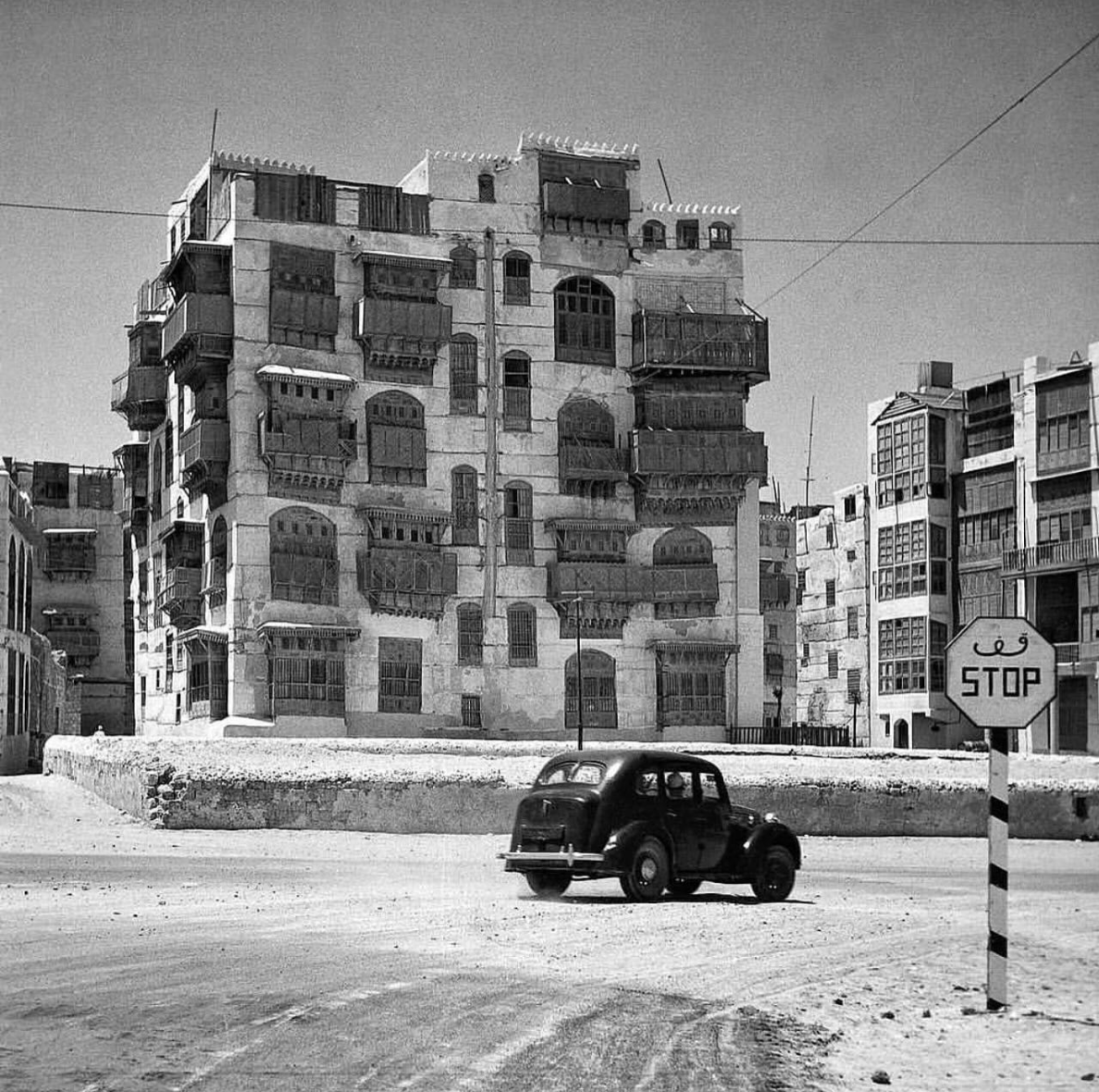
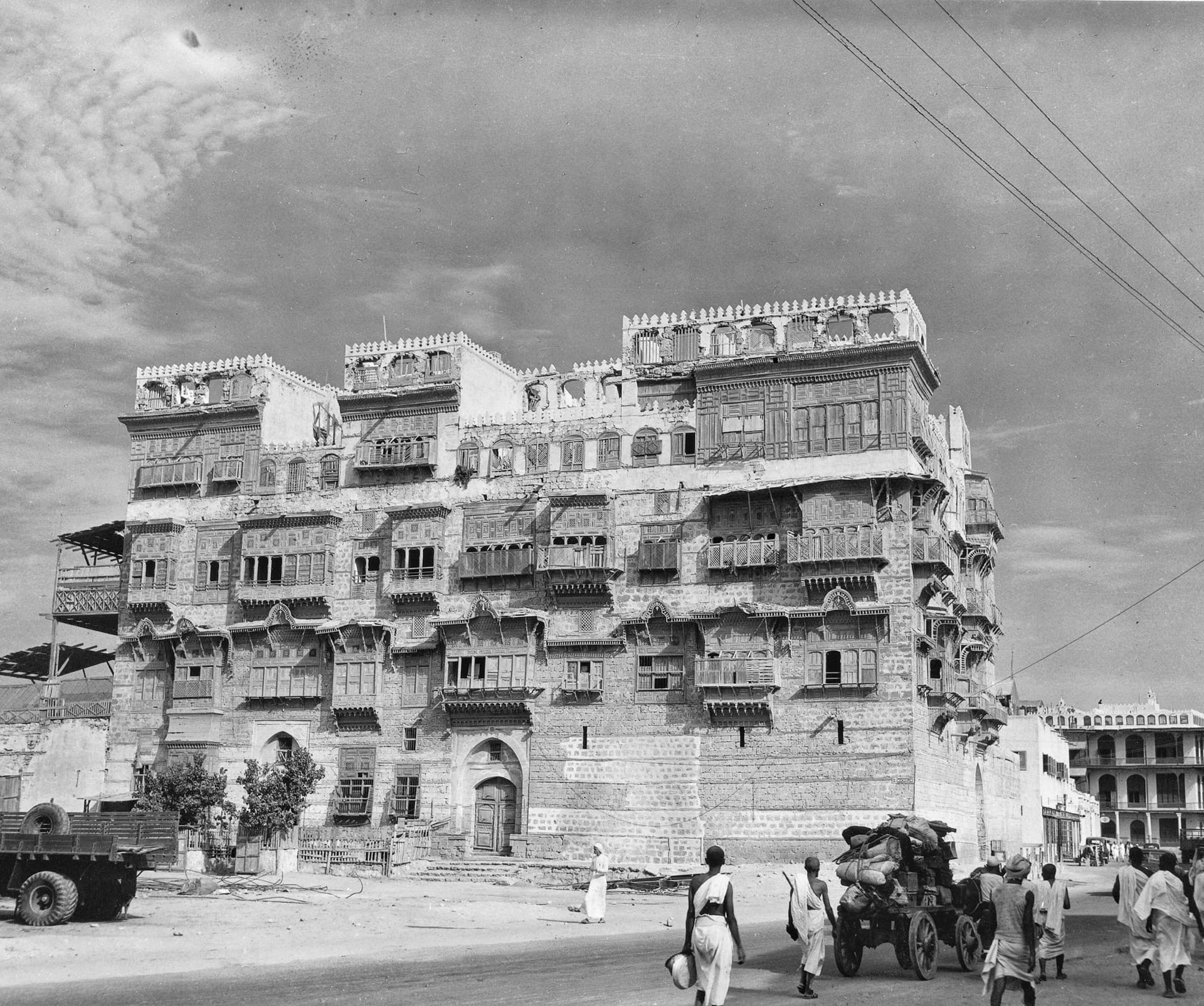
Within minutes, the legal formalities of the port of Jeddah were completed. Soon we were standing on Jeddah’s grandest street. Magnificent buildings in American architectural style surrounded us, and in the center, a beautiful park was under construction.
There we first met Janāb Mawlānā Muḥammad Salīm Ṣāḥib, the administrator of Madrasah Ṣawlatiyyah of Makkah. After that, we proceeded to our place of residence. Since we had to wait for transportation to al-Madīnah al-Munawwarah, we remained in Jeddah for four days.
During this four-day stay, we explored the city thoroughly. Every corner of that land seemed infused with love and familiarity. It felt as though it were a place we had known forever. There was not the slightest sense of strangeness. The eyes of longing fulfilled their desire fully, yet even then the spirit of devotion complained of its own inadequacy.
Remembrance of Makkah while in Jeddah
During the four days of our stay in Jeddah, a certain pain continued to strike the heart repeatedly. It is perhaps appropriate that you also come to know of that feeling, perhaps it may be of some benefit.
Our intention to first present ourselves at al-Madīnah al-Munawwarah had been made for two reasons.
First, we intended to assume the iḥrām for Ḥajj at Dhū al-Ḥulayfah, in Masjid al-Shajarah, so that the rites of Ḥajj might begin from the very place where the Noble Prophet ﷺ began his own pilgrimage.
Second, we had heard from pilgrims that after the completion of Ḥajj, people’s spiritual enthusiasm often diminishes, and many go to Madinah in such a state that their bodies are in Madinah while their thoughts remain at the port of Jeddah.
Our desire, however, was that we should present ourselves before the Messenger of Allāh ﷺ in a state wholly filled with love and longing.
But when we reached Jeddah, the spiritual attraction of the Kaʿbah exerted such a powerful pull upon the heart that the thought of proceeding onward without first beholding the Kaʿbah felt like clear discourtesy.
May Allāh reward the jurists of the Ummah with goodness! How well they understood the nature of human hearts. They write concerning the visitation of Madinah that if a pilgrim passes by Madinah on his route yet proceeds onward without visiting the Prophet ﷺ, this reflects discourtesy and hardness of heart.
Exactly the same feeling overtook the pilgrim who was about to leave Makkah for Madinah! We asked the travel agent to arrange for us to go first to Makkah, but he expressed his inability and said, “You have already paid the fare for traveling to Madinah first; therefore, it is no longer possible.”
From the standpoint of the Sharīʿah, there was certainly no impropriety in visiting al-Madīnah al-Ṭayyibah first. Yet this was simply the state of the heart, and it seemed necessary to recount it.
In this matter, a scholar from the Ahl al-Ḥadīth group adopted a very good solution. What he did was this: He entered Iḥrām for ʿUmrah at Yalamlam, then after disembarking at Jeddah, went directly to Makkah, completed the ʿUmrah, then proceeded to Madinah, and afterward returned to Makkah again before Ḥajj.
This method increases the expense by perhaps forty or fifty rupees (rather, only fifteen or twenty rupees, as corrected by Nuʿmānī), but in my opinion, this is a very appropriate arrangement. In any case, we now awaited the journey to al-Madīnah al-Ṭayyibah with eager anticipation.
The Journey to Madinah
The agent promised morning and evening that the vehicle would soon be ready. By coincidence, on 20 September (16 Dhū al-Qaʿdah), we performed the Maghrib prayer in a mosque where Shaykh Muḥammad Maẓhar Nadwī also happened to arrive.
Shaykh Muḥammad Maẓhar was the younger brother of Shaykh ʿAbd al-Raḥmān Maẓhar, who was the Raʾīs al-Muṭawwifīn (chief guide of the Indian pilgrims). Shaykh Maẓhar himself worked in the Ministry of Foreign Affairs office in Jeddah. He had been my fellow student at Nadwat al-ʿUlamāʾ.
He greeted us warmly, immediately took us to his splendid residence, and affectionately complained that we had not stayed with him. He asked about the condition of Nadwah and spoke with great warmth.
When we mentioned that we were waiting to travel to Madinah, but that no arrangement had yet materialized, he immediately accompanied us to the agent and firmly insisted, “Arrange a vehicle immediately, and the first vehicle going to Madinah must take this group.” In response to Shaykh Maẓhar’s influential request, the agent replied, “Ḥīn!” — “Immediately.”
Shaykh Maẓhar then departed after bidding us farewell. We performed the ʿIshāʾ prayer, and soon afterward, a lorry arrived, and we set out for al-Madīnah al-Ṭayyibah.
Arrival in Madinah
From Jeddah to Rābigh, the terrain is desert, and from Rābigh to Madinah, the landscape becomes mountainous. Stopping at stages along the way, we finally reached al-Madīnah al-Munawwarah on the evening of 22 September 1948 (18 Dhū al-Qaʿdah 1367 AH).
The mountains and deserts along the road became so deeply engraved in our hearts through love and reverence that their image still remains before my eyes today. Again and again the thought occurred: Perhaps the gaze of the Messenger of Allāh ﷺ once fell upon some of these very mountains.
Perhaps the Companions رضي الله عنهم or members of the family of the Prophet ﷺ once passed through these very places. Perhaps the horses of the warriors of Islam once trampled these paths.
Because of this, viewing those radiant deserts and mountains through the colored lenses of spectacles felt unbearable to the eyes of longing. Eventually, those colored lenses had to be removed.
Dhū al-Ḥulayfah and Masjid al-Shajarah
On 22 September, at the beginning of the time for ʿAṣr, we reached Dhū al-Ḥulayfah (now known as Biʾr ʿAlī رضي الله عنه). We began searching for Masjid al-Shajarah. This was the place where, during the Farewell Pilgrimage, the Messenger of Allāh ﷺ had camped beneath a tree and assumed iḥrām.
Later, a mosque was built there, which became known as Masjid al-Shajarah. However, this mosque lies somewhat away from the main settlement of Dhū al-Ḥulayfah, and ordinary pilgrims rarely reach it. Now it had become completely ruined, nothing but a heap of stones.
It was said that a flood had occurred in recent times that destroyed the structure, and it had not yet been rebuilt. AlḥamduliLlāh, our entire group was blessed with the opportunity to visit that radiant place.

First Sight of Madinah
From there, Madinah was very near. At that moment, all excitement disappeared, and all claims of love seemed forgotten. Only a certain majesty or beauty remained, under whose watchful presence the caravan of the heart continued forward. Subḥān Allāh!
Now the signs of Madinah began to appear. Then came Bāb al-ʿAnbariyyah. Despite all attempts to persuade him, the driver refused to stop anywhere except his designated station. Soon, the vehicle halted in one of the main markets of Madinah. There we met ʿUthmān Ṣāḥib, the representative of Shaykh al-Muzawwirīn Bahāʾ al-Dīn Khāshuqjī.
The time for ʿAṣr prayer had already begun at Dhū al-Ḥulayfah, but we had hoped to perform it in al-Masjid al-Nabawī.
Now the entire group waited for the vehicle to move again so that we might reach our lodging. But the driver disappeared! ʿUthmān Ṣāḥib suggested, “Here before us is the mosque of Sayyidunā ʿUmar رضي الله عنه. Pray ʿAṣr there.” But as the poet says:
جب مہر نمایاں ہوا سب چھپ گئے تارے
تو مجھ کو بھر بزم میں تنہا نظر آیا
When the sun appears, all the stars vanish;
In the whole assembly, only the Beloved remains visible.
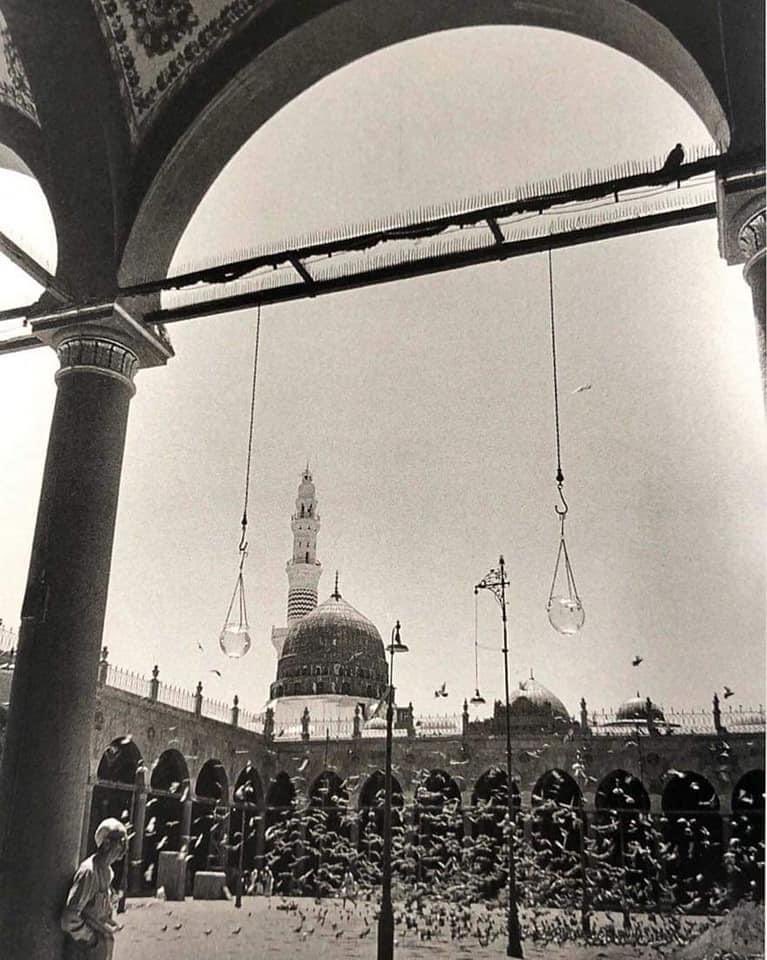
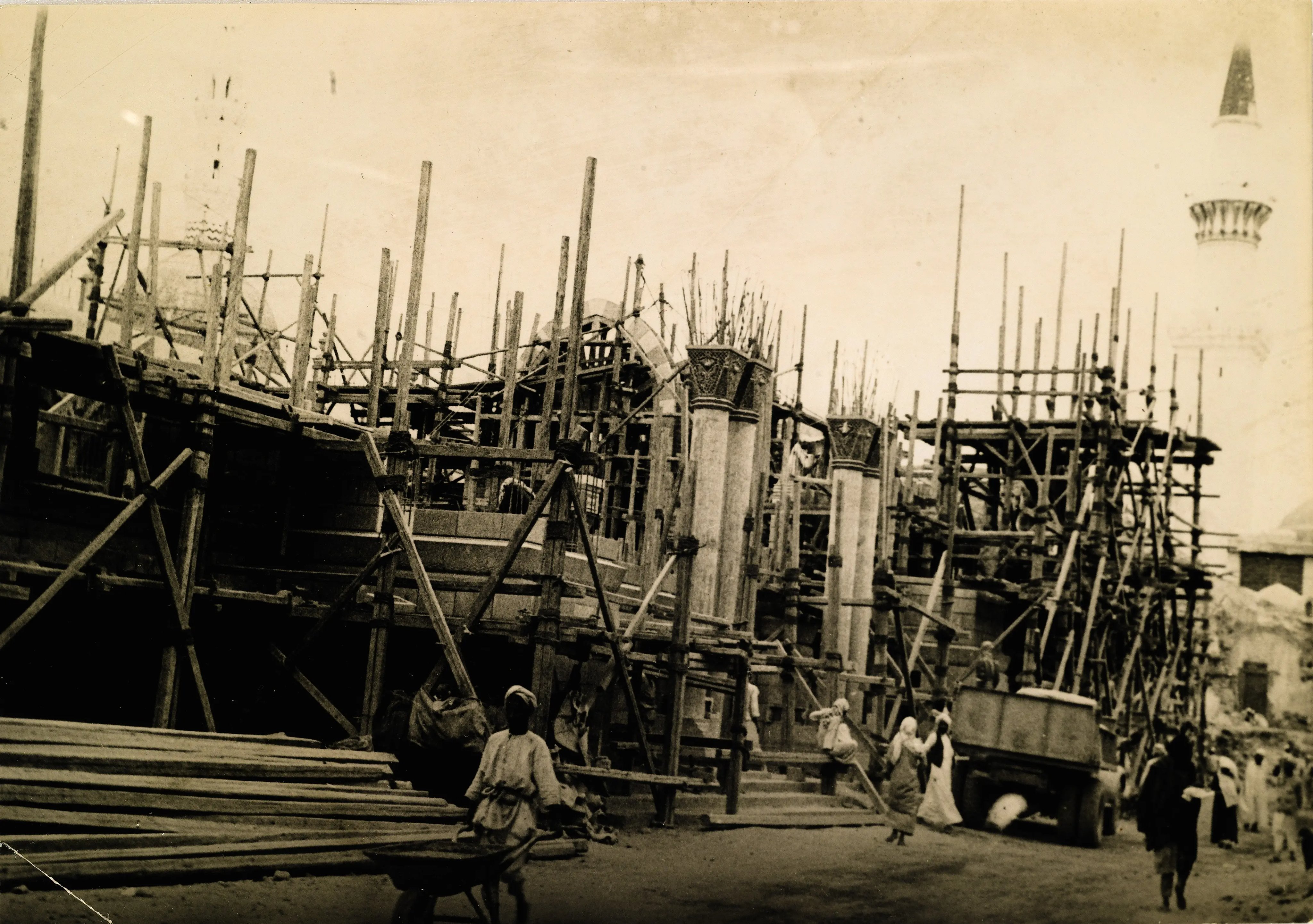
Today, the heart desired only to pray in that mosque which enjoys the honor of association with the Messenger ﷺ, and in whose blessed precincts that noble presence still shines. Thus, leaving the entire group and the vehicle behind, this humble writer and my companion Nasīm Ṣāḥib Nagrāmī set out toward al-Masjid al-Nabawī ﷺ.
Entering the Prophet’s Mosque
We had started walking, but we did not know the way! Even more astonishing was that somehow we could not gather the courage to ask anyone directly for the location of the Prophet’s Mosque. Instead, we asked a few people for directions to the Madrasah al-ʿUlūm al-Sharʿiyyah, which is adjacent to the mosque.
After that, our steps moved almost of their own accord, as though drawn by some magnetic force. Then suddenly—the Green Dome appeared. And there before us stood Bāb al-Salām.
اللَّهُمَّ صَلِّ وَسَلِّمْ عَلَى سَيِّدِنَا وَمَوْلَانَا مُحَمَّدٍ وَعَلَى آلِ مُحَمَّدٍ بِعَدَدِ كُلِّ شَيْءٍ مَعْلُومٍ لَكَ
O Allah, send Your blessings and peace upon our master and patron Muḥammad, and upon the family of Muḥammad, in a number equal to everything that is known to You.
All the authoritative books, Urdu, Arabic, and Persian, about the etiquette of visiting Madinah had been read beforehand precisely for this day. But who knew that at that moment the senses would abandon us, and the mind and heart would fail entirely?
Our steps would no longer move. We leaned upon each other for support. Then slowly we advanced and, trembling and cautious, entered al-Masjid al-Nabawī ﷺ through Bāb al-Salām.
The congregational prayer had already concluded. We performed our prayer and thanked Allāh تعالى for granting us this supreme blessing. Now it was time to present ourselves before the Prophetic Court ﷺ.
Twelve Days in Madinah
Our revered teacher Shaykh al-Islām Mawlānā Sayyid Ḥusayn Aḥmad Madanī مد ظله had given special instructions regarding this occasion. By the blessings of his guidance, that stage too was completed.
We remained in al-Madīnah al-Ṭayyibah for twelve days. Believe me when I say that the streets, markets, walls, and atmosphere of Madinah produced such a state in the heart that one wished to sacrifice one’s entire being for it. Every particle of its sacred soil seemed to breathe love and intimacy.
From the era of the Prophet ﷺ until the present, the entire Islamic history of Madinah came alive before our eyes.
The imagination witnessed:
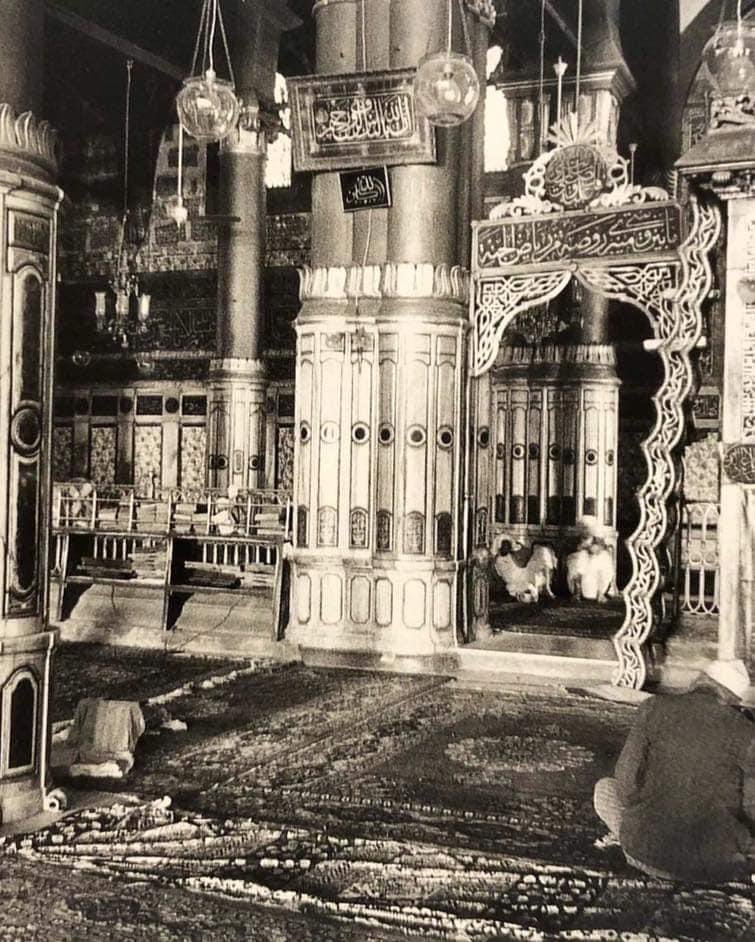
- Gatherings of the Companions رضي الله عنهم in Rawḍat al-Jannah.
- The Messenger ﷺ standing in prostration near Miḥrāb al-Nabī.
- Delegations entering near Ustuwānat al-Wufūd.
- The devoted companions standing guard at Ustuwānat al-Ḥaras.
- Abū Lubābah رضي الله عنه bound to the pillar, then freed by the blessed hand of the Prophet ﷺ.
- Gatherings of the elite of the Ummah near Ustuwānat ʿĀʾishah رضي الله عنها in prayer and supplication
And the imagination heard:
- The sermons of the Prophet ﷺ from the minbar.
- The teaching of the Aṣḥāb al-Ṣuffah in the Prophet’s mosque.
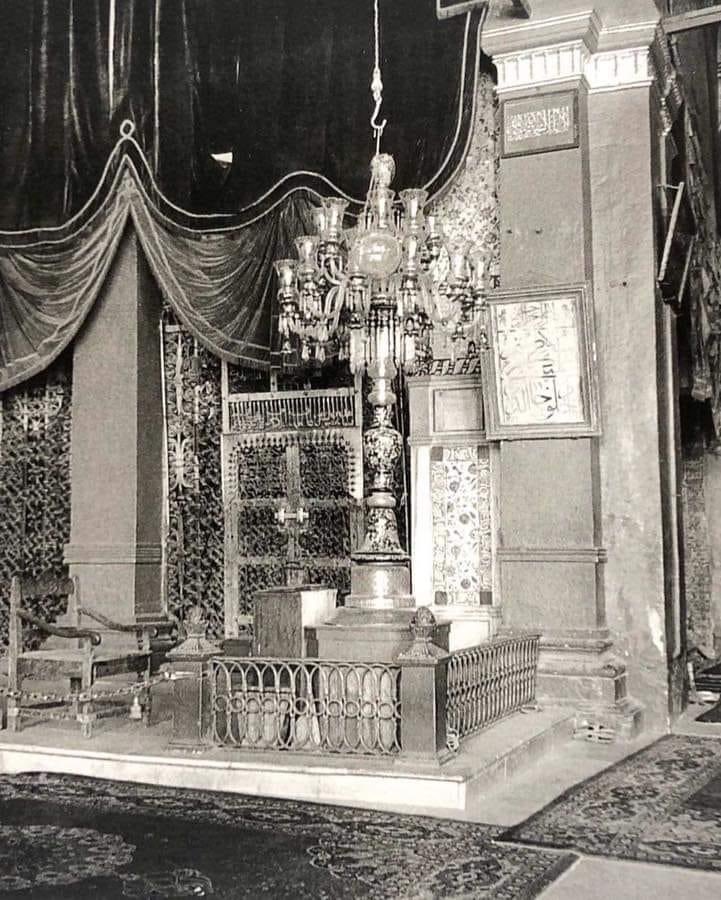
But what words can describe the most sacred spot of that blessed earth, where the Seal of the Messengers ﷺ, the Beloved of the Lord of the Worlds, rests today alongside his two noble companions. May Allāh grant every Muslim the honor of presenting himself there.
The Prayer at the Prophet’s Tomb
That moment will never be forgotten when a sinful servant stood before the Prophet ﷺ and said,
“O Messenger of Allāh! Even disbelievers who came as petitioners to this court were not turned away empty-handed. We, whatever our shortcomings, are nonetheless believers in your religion and followers of your path. Therefore, O Messenger of Allāh ﷺ, let it not be that we return from here deprived.”
By the Lord Who is Raʾūf and Raḥīm, the One Who described His Messenger in His Book as:
بِالْمُؤْمِنِينَ رَءُوفٌ رَحِيمٌ
The compassion and mercy of that noble being extended assistance in every way. صلى الله عليه وسلم
Arrival in Makkah al-Mukarramah
On the 29th of Dhū al-Qaʿdah 1367 AH, after Maghrib, we departed from al-Madīnah al-Munawwarah. After the passing of the next day, according to Indian timekeeping, at two o’clock in the night, we were blessed with the fortune of presenting ourselves in Makkah al-Mukarramah.
At that hour, it was night there, yet the sun of our good fortune stood at its zenith. All were immersed in sleep, but our destiny was awake. The nobility of fate and the brilliance of fortune had brought us that day to the city by which the Qurʾān has sworn an oath.
Here, Ādam عليه السلام once dwelt.
Here, Hūd عليه السلام and Ṣāliḥ عليه السلام sought refuge.
Here, Ibrāhīm عليه السلام migrated.
Here, Ismāʿīl عليه السلام chose to reside.
Here, the Messenger of Allāh ﷺ was born.
These very streets and paths were traversed by Jibrīl al-Amīn عليه السلام.
Here, the Burāq placed its steps.
Today, the eyes of reverence lower themselves, and the head of devotion bows. Today, the ocean of faith is in tumult. Today, the spirit of love and reverence trembles through every vein and fiber of being.
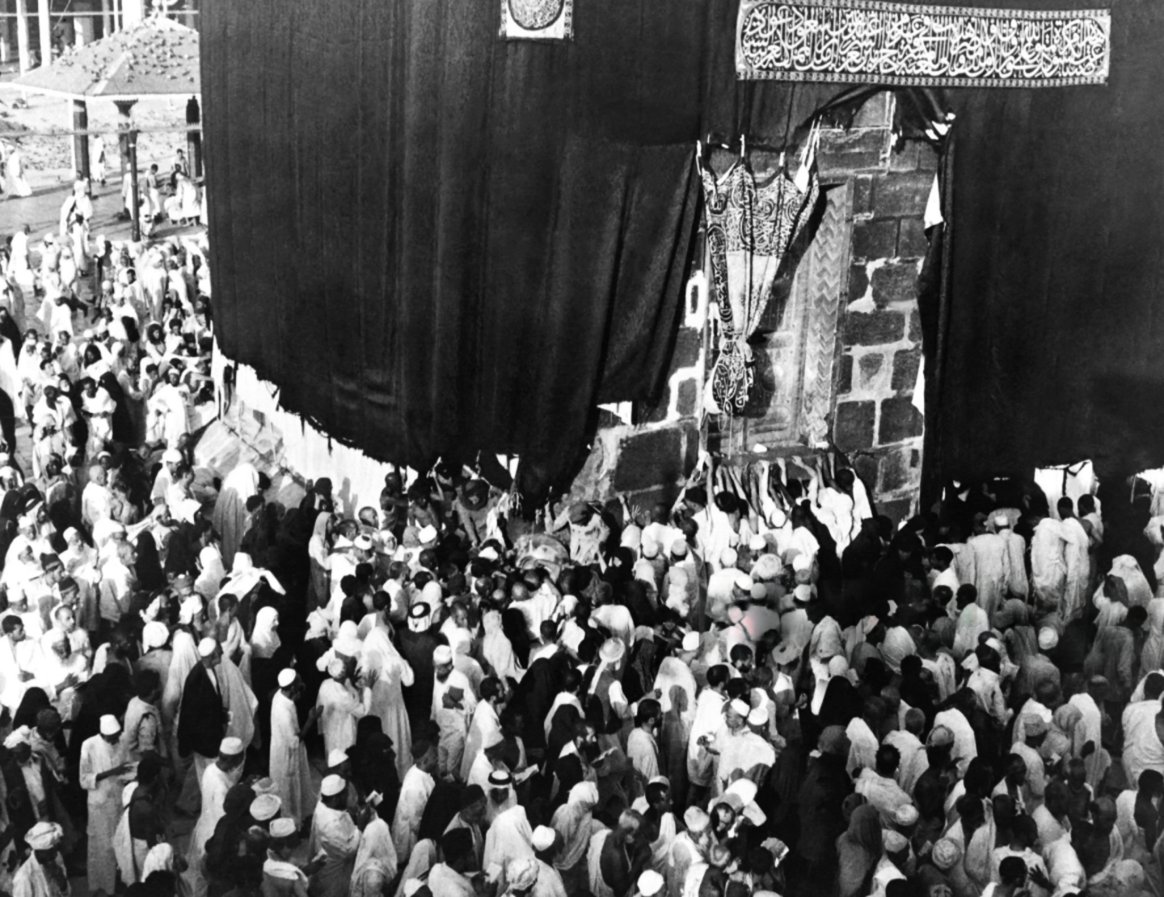
The Kaʿbah and Its Spiritual Attraction
O Lord! What is there within this black-clad structure called the Kaʿbah that draws hearts irresistibly toward it? Children, the elderly, the young, the middle-aged, women and men, the sick and the healthy, all circle around it like those intoxicated with love.
To the south-east of Baytullāh, near the door of the Kaʿbah, a black stone is embedded in the corner of the wall. See how people rush toward it! The city of Makkah has changed. Every brick of the Kaʿbah has changed.
But this is the very stone upon which the sacred lips or blessed hands of the Prophets, from Prophet Ibrāhīm عليه السلام to the Messenger of Allāh ﷺ, have touched. Thereafter, it was touched by the Rightly Guided Caliphs, the Companions رضي الله عنهم, the great Imams, and the saints of Allāh. And today, our sinful lips and hands, too, are touching it.
The Custodians of the Kaʿbah
Who are these people? They are the Shaybīs, who have come to open the Kaʿbah. Subḥān Allāh! Today, our eyes witnessed a living miracle of the Messenger of Allāh ﷺ.
Before the Hijrah, one day the Messenger of Allāh ﷺ asked ʿUthmān ibn Ṭalḥah, the keeper of the Kaʿbah’s key, to hand him the key. He refused. Then the Prophet ﷺ said with prophetic authority, “ʿUthmān, a time will come when the key of the Kaʿbah will be in my hand, and I shall give it to whomever I wish.”
Years later, Makkah was conquered. ʿUthmān was summoned, and by the command of the Prophet ﷺ, the key of the Kaʿbah was returned to him. The Prophet ﷺ then asked, “ʿUthmān, do you remember?” He acknowledged the earlier incident.
The Prophet ﷺ then declared, “This key shall remain forever in the family of ʿUthmān ibn Abī Ṭalḥah. None shall take it from you except an oppressor.”
When ʿUthmān passed away, the key came into the possession of Shaybah ibn ʿUthmān ibn Abī Ṭalḥah, and hence this family became known as the Shaybīs.
Reflect for a moment: Governments have vanished. Nations have perished. Yet the family of Shaybah still exists today, and the key of the Kaʿbah remains in their lineage.
A Remarkable Incident Related to the Shaybī Family
Mawlānā Muḥammad Ṭayyib Ṣāḥib, the rector of Dār al-ʿUlūm Deoband, once delivered a sermon in Makkah near the Ḥaram, during a gathering of the Tablīghī Jamāʿah in which we were present.
He narrated a remarkable incident. He said that when Mawlānā Rafīʿ al-Dīn Ṣāḥib (former rector of Dār al-ʿUlūm Deoband) came for Ḥajj, he took a sword and a sword-belt to the Shaybī custodian and said:
“According to the prophecy of the Messenger ﷺ, someone from your family will remain until the end of time. Therefore, it is necessary that when Imām al-Mahdī appears, someone from your lineage should still be present.
The reward of those who fight alongside the Mahdī will equal the reward of the warriors of Badr. Please keep this sword and belt in trust and pass down the instruction through generations that whoever from your lineage lives during the time of the Mahdī should present this to him on my behalf.
The belt is for his use in recitation, and the sword should be given to one of his warriors so that he may perform jihād with it.” Subḥān Allāh! The zeal for reward identifies such subtle opportunities!
Al-Multazam
Between the door of the Kaʿbah and the Black Stone lies the portion of the wall known as al-Multazam. People cling to it, making supplications and weeping bitterly, like a child clinging to the chest of its mother.
The Messenger of Allāh ﷺ himself would press his blessed chest and cheek against the wall of the Kaʿbah at this very place.
Zamzam and Maqām Ibrāhīm
Before us lies Zamzam. Besides its own spring, it has three channels leading from the directions of Ḥajar al-Aswad, Ṣafā, and Marwah. Drink from it abundantly.
Nearby is Maqām Ibrāhīm. The Qurʾān states concerning it:
فِيهِ آيَاتٌ بَيِّنَاتٌ مَقَامُ إِبْرَاهِيمَ
In it are clear signs and the standing-place of Ibrāhīm. [Surah Aal Imran, 97]
And elsewhere:
وَاتَّخِذُوا مِنْ مَقَامِ إِبْرَاهِيمَ مُصَلًّى
You may˺ take the standing-place of Ibrāhīm as a site of prayer. [Surah al-Baqarah, 125]
Ṣafā and Marwah
Close by are the two hills regarding which Allāh says:
إِنَّ الصَّفَا وَالْمَرْوَةَ مِنْ شَعَائِرِ اللَّهِ
Indeed, (the hills of) Ṣafa and Marwah are among the symbols of Allah. [Surah al-Baqarah, 158]
Ṣafā and Marwah are those two hills where Ibrāhīm عليه السلام and Hājar عليها السلام witnessed great manifestations of divine power. Perform the Saʿī between them.
When Hājar brought Ismāʿīl عليه السلام here, and he became restless with thirst, she ran between these hills searching for water. The Saʿī commemorates that desperate search.
Stay in Makkah Before Ḥajj
We rented a house in the Jiʿād quarter at Jabal Sabʿ Nabāt. Those members of our caravan who had been left behind in Bombay due to a lack of ship space also arrived from Jeddah that very day. Since all were either from our homeland or nearby regions, we stayed together in one house, which made matters very convenient.
A week remained before Ḥajj. We spent most of this time, and much of the time after Ḥajj, in Masjid al-Ḥarām, engaged in ṭawāf of the House of Allāh. Every day, the population of Makkah increased as pilgrims continued to arrive.
All eagerly awaited the 8th of Dhū al-Ḥijjah.
Journey to Minā
Many people were arranging camels, trucks, buses, and cars to travel to Minā and ʿArafāt. A considerable number intended to walk. Most of our group also resolved to walk. Thus, on the 8th of Dhū al-Ḥijjah, after Fajr, we set out on foot toward Minā.
The distance between Makkah and Minā was three miles. We thought such a short distance would be nothing. But as the poet says:
عشق آساں نمود اوّل دلے اُفتاد مشکلہا
Love appeared easy at first — then difficulties began.
The sun burned overhead, and the desert sand scorched beneath our feet. Our feet sank into the sand with every step. Though the tongue refused to admit it, the heart was losing courage.
Yet by the grace of Allāh, we reached Minā around nine in the morning, and we were blessed to stay near Masjid al-Khayf. It is said that seventy Prophets prayed in this mosque, and some reports even say that seventy Prophets are buried there.

Journey to ʿArafāt
On the morning of 9th Dhū al-Ḥijjah, we were to depart for ʿArafāt. Reason warned: Remember yesterday’s journey to Minā — and now the distance is double!
But love responded: Whatever happens, we must walk. Did not the Prophets themselves walk this path, even barefoot? Al-ḥamdu liLlāh, reason was defeated, and we began walking toward ʿArafāt.
Soon the heart cried out again: Who knows whether such an opportunity will ever come again? Since the Prophets walked barefoot here, we should remove our shoes as well. The talbiyah was already being recited, and again the call of love was answered.
After walking perhaps twenty minutes, a lorry arrived offering to take us to ʿArafāt for a small fare. Reason then advised that we had already attained the blessing of walking barefoot, and now divine mercy had come to assist our weakness. Thus, we accepted.
Within minutes, we reached ʿArafāt, staying near Jabal al-Raḥmah. We also visited Masjid Namirah. In the evening, we tried to reach the place on Jabal al-Raḥmah where it is widely believed the Prophet ﷺ delivered the Farewell Sermon.
Shaykh ʿAbd al-Ḥaqq Muḥaddith Dehlawī رحمه الله advised that wherever one stands among the black stones of this mountain, one may hope that it coincides with the Prophet’s place.
Because of the guards of the Saudi government, we could not reach the exact place, but we were still blessed with its sight.

Remembering the Prophet’s Supplication at ʿArafāt
How vividly that day comes to mind when the Messenger of Allāh ﷺ, surrounded by the sacred assembly of the Companions رضي الله عنهم, raised his hands like a beggar and prayed for his Ummah.
Remembering that scene fills the heart with emotion. O Lord! By Your Essence and Attributes, by the mediation of Your noble Messenger ﷺ and his Companions, and by the sincerity of Your righteous saints, grant us Your pleasure, remove the hardships of the Muslims, revive Islam, and make our life and death for You alone.
Muzdalifah
Soon, the cries of “Ḥajj Mubārak! Ḥajj Mubārak!” rose everywhere. Near sunset, a cloud appeared, and the pilgrims were showered with divine mercy. We then departed for Muzdalifah.
Our guide Mawlānā ʿAbd al-Hādī Sikandar graciously transported us in his personal vehicle. The scene on the road between ʿArafāt and Muzdalifah was unforgettable: long lines of buses, cars, and trucks forming a river of lights, camels and mules carrying riders, and groups of pilgrims walking on foot.
Soon we reached Muzdalifah and stayed near Masjid al-Mashʿar al-Ḥarām. The verse repeatedly came to mind:
فَإِذَا أَفَضْتُمْ مِنْ عَرَفَاتٍ فَاذْكُرُوا اللَّهَ عِنْدَ الْمَشْعَرِ الْحَرَامِ
When you return from ’Arafât, praise Allah near Al-Mash‘ar-ul-Harām (the Sacred Monument) [Surah al-Baqarah, 198]
Subḥān Allāh! This is the place where the remaining portion of the Prophet’s supplication at ʿArafāt was accepted, causing Shayṭān to flee in despair while the Prophet ﷺ smiled.
Completion of the Rites
After Fajr, we returned to Minā, where we performed:
- Ramy al-Jamarāt
- Sacrifice
- Shaving (Ḥalq)
We then bathed, removed the iḥrām, wore normal clothes, and returned to Makkah for Ṭawāf al-Ziyārah. By Maghrib, we were back in Minā. We remained there until the evening of 12 Dhū al-Ḥijjah, after which we returned to Makkah.
Return Journey
On Saturday, 27 Dhū al-Ḥijjah 1367 AH (30 October 1948), we departed Makkah after Ẓuhr for Jeddah, arriving before Maghrib. We remained there until 8 November 1948, waiting for the ship.
Reflections on the Muslim World
During the voyage, we had the opportunity to observe Muslims from various lands. If you are full of hope and expectation, my words may sound bitter, but I cannot conceal the reality:
Western civilization and Western ideas are dominating much of the Muslim world. Concern for the Hereafter is weak. Prayer is often neglected.
Islamic identity in dress and conduct is fading. Interest in religious knowledge is diminishing. Politically, many Muslims depend upon others.
Once in Jeddah, when I went to have a letter written, a shopkeeper insisted that I adopt English-style haircuts, saying, “Faith is in the heart — what does outward appearance matter?” I rejected this advice, but my heart was wounded: O Lord! Such words on the soil of Ḥijāz!
Yet even within this “dark sea”, some waves of light were visible. Among the Egyptians, the followers of Shaykh Ḥasan al-Bannā رحمه الله displayed remarkable religious zeal. Shaykh Ḥasan al-Bannā himself had come for Ḥajj that year, though unfortunately I did not meet him. (The author later notes that Shaykh Ḥasan al-Bannā has since been martyred.)
Likewise, the Tablīghī Jamāʿah of Mawlānā Muḥammad Ilyās رحمه الله stood out distinctly for their religious character.
May Allāh grant us all the ability to do good. May He grant us a blessed end. May Islam and the Muslims flourish.
Ḥajj: Some Experiences and Advice
1. Any Muslim whom Allāh grants the blessing of performing Ḥajj at the Sacred House (Bayt Allāh) and visiting the Prophet ﷺ should ensure that the wealth used for this blessed journey is ḥalāl, pure, and that its zakāh has already been paid.
Wealth that is not pure and lawful should never be used under any circumstances, and in a journey as sacred as this, even greater caution is required.
Last year, while traveling by the Islamic ship, I happened to meet two friends who were proceeding toward the Ḥaramayn al-Sharīfayn with great formality and dignity. However, they had not paid the zakāh due on their wealth. After some counsel, they at least resolved to pay the zakāh on the amount of money they had taken from home for the journey of Ḥajj, and they promised that from then onward they would maintain proper regularity in paying zakāh.
2. In preparing for the journey of Ḥajj—arranging travel expenses, preparing luggage, meeting relatives and friends, and attending farewell meals—those intending to visit the House of Allāh spend a great deal of time. If only half of that time were spent learning and understanding the rulings and rituals of Ḥajj, it would be immensely beneficial.
Generally, pilgrims depart with the assumption that the guides (muʿallimīn) in Ḥijāz will ensure that the rites of Ḥajj are properly performed. However, during the season of Ḥajj, these guides are so overwhelmed with responsibilities that it becomes very difficult for them or their assistants to ensure that every pilgrim performs the rites in accordance with the Sunnah. Therefore, unless the pilgrim himself makes a conscious effort to perform the rites correctly, it will be difficult for him to perform Ḥajj in accordance with the Sunnah.
During last year’s Ḥajj, I personally witnessed numerous incidents which gave the impression that either the guides and their assistants were not fully acquainted with the rulings of Ḥajj, or if they were aware of them, they showed such negligence and carelessness in their performance that it was deeply distressing.
Hence, my sincere request is that one should never rely entirely upon the guides in performing the rites of Ḥajj. Rather, the pilgrim should personally learn the rulings thoroughly.
If the pilgrim is educated, he should read the books written on the Manāsik al-Ḥajj repeatedly. For Urdu-educated readers, the book Muʿallim al-Ḥujjāj is among the best works on the rites of Ḥajj.
The guides will still be necessary for certain matters—for instance, even if you know the rulings of Ḥajj, you may not know the exact locations. In such circumstances, one cannot manage without the assistance of the guides or their helpers.
However, in the actual performance of the rites, you must remain firm upon the methods you have learned from reliable books or authentic scholars—even if the guides or their assistants become displeased with your adherence to them.
3. From the beginning of the journey of Ḥajj until its end, one extremely sorrowful scene is repeatedly observed: most pilgrims do not observe the etiquette of travel (ādāb al-safar). Actions that are inappropriate even in ordinary circumstances are openly displayed during this blessed journey merely out of habit.
Last year at Lucknow railway station, when a large group of pilgrims was departing for Bombay, I witnessed an incident in which one group had reserved a railway compartment. However, as soon as the train arrived at the station, pilgrims who had not made reservations occupied that compartment. Even after repeated reminders, they refused to vacate the seats, and the matter escalated into unpleasant arguments.
Similarly, on the return journey in Jeddah, while attempting to secure places on the ʿAlawī ship, such chaos arose among the pilgrims that it nearly led to physical fighting. In this conflict, even women joined alongside the men.
A similar disorder is commonly observed in Bombay in guesthouses, in the scramble for places on ships, while boarding transport, and in Ḥijāz when trying to secure places on motor vehicles or camels, as well as during attempts to occupy space in Minā and ʿArafāt.
In my view, if pilgrims continually keep in mind the etiquettes of the Ḥajj journey and the sanctity of the pilgrimage, and if they reflect upon the true meaning and purpose of Ḥajj, then, InshāʾAllāh, this blessed journey will be completed with proper dignity and its blessings will be attained.
4. The moment the ship anchors on the shores of Jeddah, interaction between the pilgrims and the people of Ḥijāz begins, and it continues until the return journey from that very shore. Among the people of Ḥijāz whom pilgrims commonly encounter are boatmen, laborers, camel drivers, motor drivers, guides, agents, their assistants, and various petitioners.
Pilgrims should treat them as fellow human beings like themselves and should not entertain excessive naïve assumptions about them. Among them are good and bad people, gentle and harsh individuals, selfless persons, as well as those motivated by greed.
Pilgrims often travel with the assumption that everyone in Makkah and Madinah is a saintly person (Walī of Allāh). But when practical dealings occur, they become shocked and sometimes utter extremely inappropriate words. If such exaggerated assumptions were not made from the beginning, this disappointment would not occur.
It must also be remembered that these limited groups should not be used to judge all the residents of Makkah and Madinah. We, who take great pride in our own civilization, culture, and social refinement, cannot in reality match the refinement, etiquette, and moral character of the people of Makkah and Madinah. Ordinary pilgrims usually never interact with the general residents of these cities; they remain confined among a small circle of intermediaries.
I have explained this matter openly so that pilgrims may properly observe the rights and dignities of the general people of Makkah and Madinah, and so that no negligence occurs in this regard.
5. Pilgrims should especially remember not to imitate every practice of the residents of Makkah, Madinah, or other pilgrims from various Muslim countries. Just as in our own India, many among the general public are not fully knowledgeable about religion, and their actions are not always in accordance with the Sharīʿah; similarly, it would not be wise to imitate others blindly without understanding.
Therefore, in matters such as prayer, the rites of Ḥajj, dress, personal conduct, and other practices, one should adhere to the methods learned from reliable books or trustworthy scholars.
It should also be remembered that during Ḥajj, Muslims from across the world gather, and their legal schools differ: some are Ḥanafī, Shāfiʿī, Mālikī, Ḥanbalī, Ẓāhirī, and even Shīʿah are present. If we begin imitating everyone indiscriminately, we will end up confused and inconsistent. Hence, great caution is required in such matters.
6. During one’s stay in Makkah al-Mukarramah, people often become occupied with sightseeing. Indeed, the visitation of sacred places brings benefit, but the major portion of time should be spent in al-Masjid al-Ḥarām and in ṭawāf of the Kaʿbah. This opportunity is not granted to everyone repeatedly.
From my experience, the more one remains conscious of the sanctity, blessings, and virtues of the Kaʿbah, Ṣafā, Marwah, Zamzam, Minā, ʿArafāt, and Muzdalifah, and the more one understands their religious history, the greater the spiritual ecstasy one experiences. The rites will then be performed properly, and InshāʾAllāh a person will benefit from profound spiritual blessings.
Therefore, this time must not be wasted. One should engage heart and body in the remembrance of Allāh. Those who are educated should learn about these places from reliable books; others should ask knowledgeable people so that they may fully appreciate their significance.
Likewise, when visiting al-Madīnah al-Ṭayyibah, one should remain conscious of the virtues of the Prophet ﷺ, his exalted rank, and his compassion for the Ummah. The etiquette of al-Masjid al-Nabawī must be carefully observed.
The more these matters are kept in mind, InshāʾAllāh, no negligence will occur in fulfilling their rights, and the blessings will be tangibly experienced.
One major shortcoming occurs when people visit the Rawḍah Mubārakah. Many recite ṣalawāt and salām loudly and with excessive noise, neglecting the etiquette that must be observed at that sacred place. It should be clearly understood that this is a place of immense reverence, and anything that might cause discomfort or disrespect toward the Messenger of Allāh ﷺ must be strictly avoided.
7. My final submission to pilgrims is this: Take less luggage, but ensure that it adequately meets your needs. In expenses, avoid both extravagance and miserliness. I have observed people spending lavishly at inappropriate times while being miserly at moments when spending is necessary, thereby causing themselves hardship.
Likewise, if people cultivate patience and do not become agitated too quickly, they will experience far greater comfort. When boarding or disembarking from ships, one often sees extreme panic, even though everyone knows that the ship will not depart until all pilgrims have boarded.
Similarly, during travel from Jeddah to Makkah, Madinah, and when departing for Minā, ʿArafāt, and Muzdalifah, people should remain calm and composed rather than becoming unnecessarily anxious.
By the grace of Allāh, I did not encounter any major hardship during my journey, except on one occasion due to inexperience. This occurred on the night in Muzdalifah. After sunset, all pilgrims depart from ʿArafāt and gather in Muzdalifah. For a few hours, millions of people gather in a single place.
It is night, the place is unfamiliar, where will water be found? Where will food be obtained? There is hardly a path to move about, and if one leaves the group, finding one’s companions again in that vast crowd becomes extremely difficult. Had we brought water with us from ʿArafāt on camels or vehicles, no difficulty would have arisen. By the grace of Allāh, we eventually obtained water, but only after much waiting and effort. Therefore, my advice is that pilgrims should prepare themselves for Muzdalifah already while leaving ʿArafāt.
Similarly, one should seek good companions for the journey. Good companions are among the great blessings of Allāh. By the grace of Allāh, I was fortunate in this regard. From beginning to end, my companions were Ḥājjī Muḥammad Nasīm Nagrāmī and Ḥājjī ʿAbd al-Majīd Nagrāmī. Through their conduct, they made it seem as though they owed me no rights, while they considered all my rights as their own. As a result, our mutual affection continued to grow throughout the journey. Indeed, examples of such companionship are rare.
الحمد لله على ذلك!
In any case, good companions should be sought, and their feelings should always be respected while also recognizing one’s own responsibilities toward them. If this is done, InshāʾAllāh, the journey will become much easier.
Ḥajj: A Few Points to Keep in Mind
In connection with Hajj, recalling certain matters has proved extremely beneficial in the experience of the writer. The following lines record those matters. It is quite possible that they may benefit another servant of Allah as well, and that at some time a prayer of goodwill may issue from his tongue.
1. Travellers to the Sacred Sanctuary have been declared by Allah, the Blessed and Exalted, to be His guests. Imam Ibn Mājah records that the Prophet ﷺ said, “Those who perform Hajj and those who perform ‘Umrah are the guests of Allah. If they supplicate, Allah accepts their supplication; and if they seek forgiveness, the Almighty forgives them.”
Just as the host has obligations toward the guest, the guest, too, has obligations toward the host, and these obligations must be observed. If pilgrims remember this point and remain conscious of the immense honor of being guests, then, InshāʾAllāh, they will experience a remarkable delight throughout the entire period of Hajj.
The rulings of Hajj, its conditions, pillars, and etiquettes, are in reality those very rights that become incumbent upon the pilgrims by virtue of being the guests of the Almighty. They should not be regarded merely as dry legal problems; rather, when they are observed with the awareness of being guests of Allah, acting upon them and observing them becomes immensely beneficial.
2. The purpose and essence of all the rites of Hajj is the remembrance of Allah. If this fundamental principle is kept in mind while performing the rites of Hajj, then, InshāʾAllāh, these outward actions will also produce some spiritual taste within the heart. The Noble Prophet ﷺ said,
“The circumambulation of the Ka‘bah, the running between Ṣafā and Marwah, and the stoning of the pillars are only for the remembrance of Allah.” [Tirmidhī]
Suppose there is a person who completes these rites of Hajj but whose heart remains empty of the remembrance of Allah. How can he compare, in terms of blessings and fruits, with the one whose every movement is filled with the blessing of divine remembrance?
3. Closely related to this is another point that should also be remembered: at every step in the rites of Hajj, there is a proclamation of Tawḥīd. When the pilgrim enters into iḥrām, he recites the Talbiyah, which openly proclaims the Oneness of the Almighty and rejects shirk.
لبّيك اللّٰهم لبّيك، لبّيك لا شريك لك لبّيك، إنّ الحمد والنّعمة لك والملك، لا شريك لك۔
“Here I am, O Allah, present before You; here I am. Here I am—You have no partner—here I am. Indeed, all praise and all blessings are Yours, and the dominion is Yours. You have no partner.”
When the pilgrim sets his gaze upon the Ka‘bah, he says:
اللّٰه أكبر، لا إله إلا اللّٰه، واللّٰه أكبر۔
“Allah is the Greatest. There is no one worthy of worship except Allah. Allah is the Greatest.”
When performing prayer at Maqām Ibrāhīm, it is preferable, and it is the Sunnah of the Messenger of Allah ﷺ, that after Sūrat al-Fātiḥah one recites Sūrat al-Kāfirūn in the first rak‘ah and Sūrat al-Ikhlāṣ in the second. Both of these sūrahs fundamentally proclaim Tawḥīd and refute shirk.
When proceeding for the sa‘y between Ṣafā and Marwah, upon reaching the two hillocks, the pilgrim first recites:
لا إله إلا اللّٰه وحده لا شريك له، له الملك وله الحمد وهو على كل شيء قدير۔
“There is no deity except Allah alone; He has no partner. His is the dominion, and His is the praise, and He has power over all things.”
Proceed to Minā or to ‘Arafāt, and continue to recite the Talbiyah frequently. When you go to ‘Arafāt, the best supplication taught for that place is:
لا إله إلا اللّٰه وحده لا شريك له، له الملك وله الحمد وهو على كل شيء قدير۔
“There is no deity except Allah alone; He has no partner. His is the dominion, and His is the praise, and He has power over all things.”
The Prophet ﷺ said that this supplication is the supplication of himself and of the prophets before him at ‘Arafāt. In some narrations, it is reported that the Prophet ﷺ recited this verse at ‘Arafāt:
شَهِدَ اللّٰهُ أَنَّهُ لَا إِلٰهَ إِلَّا هُوَ وَالْمَلَائِكَةُ وَأُولُو الْعِلْمِ قَائِمًا بِالْقِسْطِ ۚ لَا إِلٰهَ إِلَّا هُوَ الْعَزِيزُ الْحَكِيمُ
“Allah bears witness that there is no deity worthy of worship except Him, and so do the angels and those endowed with knowledge, upholding justice. There is no deity worthy of worship except Him, the Mighty, the Wise.” [Sura Aal Imran, 18]
At the time of Ramy al-Jamārāt, one says:
بسم اللّٰه، اللّٰه أكبر، رغماً للشيطان ورضاً للرحمن۔
“In the name of Allah—Allah is the Greatest. (I cast this stone) in humiliation of Satan and in seeking the pleasure of the Most Merciful.”
Reflect upon all these matters and try to understand how, at every stage, there is an affirmation and proclamation of Tawḥīd.
What is required is that the pilgrim immerse himself in this Tawḥīd. Tawḥīd should not remain merely a statement upon the tongue; it should become a state of being. Tawḥīd does not merely mean saying that God is One—it means truly knowing Him as One. Worship, love, and ultimate seeking should belong only to the Almighty, and His alone should be realized as the First and the Last, the Manifest and the Hidden.
4. Whenever the fortunate pilgrim recites the Talbiyah, he should remember that every object on earth joins him in it. The Prophet ﷺ said,
“When a Muslim proclaims ‘Labbayk,’ everything to his right and left up to the farthest end of the earth, such as stones, trees, and clods of earth, also proclaims ‘Labbayk.’” [Tirmidhī]
Keeping this prophetic statement in mind grants the one who recites the Talbiyah a remarkable spiritual delight.
5. In the ṭawāf after which sa‘y is to be performed, ramal is carried out—that is, during the first three circuits, one walks somewhat briskly with the shoulders moving in a display of vigor.
The reason for this was that the disbelievers once taunted the Muslims by saying that the fever of Madinah had weakened them. Therefore, the command was given to walk in this manner so that strength and dignity might be demonstrated before the disbelievers. It is evident that now the enemies of the faith are not present there, yet the practice of ramal remains.
Shaykh ‘Abd al-Ḥaqq Muḥaddith Dehlawī (رحمه الله) advises, “If this expression of strength and dominance is considered in relation to the inner enemies, namely Satan and his hosts, then it becomes even more conducive to spiritual taste and presence.” [Sharh Safar As-Sa’dat]
6. When the fortunate visitor to the Sacred Sanctuary attains the honor of presenting himself in Madīnah al-Munawwarah and gains the privilege of proximity to the court of the Prophet ﷺ, he should remember all the rights that the Prophet ﷺ possesses over the Ummah.
In this connection, it is appropriate to quote a few lines from one of the blessed writings of Mawlānā Sayyid Ḥusayn Aḥmad,
“When presenting oneself at the Blessed Rawḍah, one should imagine the noble soul of the Prophet ﷺ as present there, hearing and knowing, while reflecting upon his unseen majesty and beauty. Consider yourself as attending the court of the Emperor of the world ﷺ, and observe every form of etiquette. Avoid unnecessary gatherings and idle conversations. Fill your time with sending blessings upon the Prophet, remembrance of Allah, meditation, recitation of the Qur’an, and voluntary prayers.”
7. In this connection, it is also appropriate to mention that some pilgrims have been observed comparing Madīnah al-Munawwarah and Makkah al-Mu‘aẓẓamah, and uttering such words regarding Makkah that hearing them causes alarm.
During my stay in Makkah al-Mu‘aẓẓamah, the writer sometimes had to exercise great patience in this matter.
Remember that all the greatness and belovedness of Madīnah al-Munawwarah are undisputed. But this does not mean that one should say that Makkah al-Mu‘aẓẓamah is completely “empty.” (Astaghfirullāh, astaghfirullāh. A‘ūdhu billāh min sharri al-shayṭān wa sharakih.)
The greatness and love of Madīnah Ṭayyibah exist because of the one who came from Makkah. The Qur’an itself has called Makkah “Balad Amīn” (the secure city). The Prophet ﷺ himself expressed his love for it. The Ka‘bah is here, whose circumambulation even the Prophet ﷺ performed. The symbols of Allah, Ṣafā and Marwah, are here. Zamzam is here. Minā, ‘Arafāt, and Muzdalifah are here as well. How then can Makkah be called empty?
Regardless of the scholarly discussions found in books on this matter, we must guard our tongues completely in this regard lest any word of disrespect escape.
During my stay in Makkah, I once remarked to some friends that my own inclination suggests that Madīnah al-Munawwarah, Makkah al-Mu‘aẓẓamah, and within Makkah itself—Ṣafā and Marwah, Minā and ‘Arafāt, and Muzdalifah—each possesses its own distinct manifestations of divine radiance. Wherever the pilgrim goes among these places, the spiritual states of that place should prevail over him.
In this way, the reverence and etiquette of every sacred place are maintained.